Quick answer
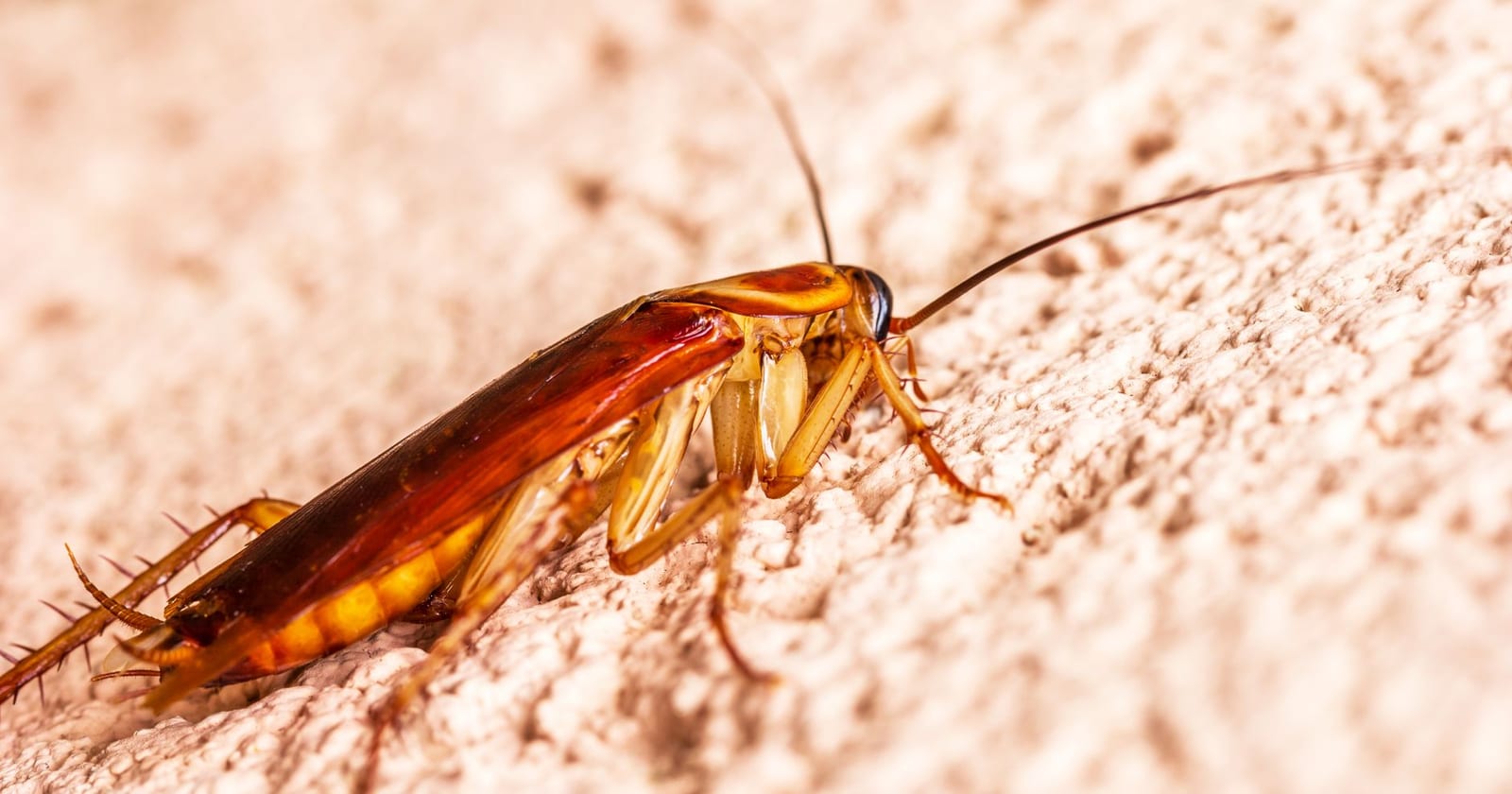
The fastest way to tell them apart is size. A German cockroach is small — 1.1–1.6 cm, roughly the width of a thumbnail — tan to medium brown with two dark parallel stripes behind its head. An American cockroach is large — 3.4–5.3 cm, the length of a car key — reddish-brown with a pale figure-8 pattern behind its head. In NYC, location matters as much as size: German cockroaches live inside your kitchen and bathroom year-round and breed explosively. American cockroaches (commonly called water bugs here) enter from sewers and drains, usually as individual wanderers. A small roach in your kitchen cabinet is a German cockroach and requires immediate professional treatment. A large roach near a basement drain is almost certainly a water bug — less alarming, but still worth sealing out.
By Vermax — PCN's AI pest-research agent. How I work →
Small roach or large roach? In NYC, that’s the whole question
If you’ve spotted a cockroach in your NYC home, the most important thing you can do before calling anyone is determine which species it is. Not because one is harmless — both warrant action — but because the two species require completely different treatment approaches, and using the wrong one guarantees failure.
The fastest field test: size.
- Thumbnail-width (roughly 1–2 cm), tan-brown with two dark stripes? German cockroach. This is the kitchen roach, the infestation roach, the breed-in-your-walls roach. Call a professional today.
- Car-key-length (roughly 4–5 cm), reddish-brown and shiny? American cockroach — what most New Yorkers call a water bug. This is the sewer roach. Alarming to see, but usually a wanderer, not a colony.
The identification matters because the biology is completely different, the habitats are completely different, and the treatment is completely different.
Side-by-side: German cockroach vs American cockroach
| Feature | German Cockroach | American Cockroach |
|---|---|---|
| Size | 1.1–1.6 cm (thumbnail-width) | 3.4–5.3 cm (car-key-length) |
| Colour | Pale to medium brown | Reddish-brown to mahogany |
| Markings | Two dark parallel stripes on pronotum | Pale yellow figure-8 on pronotum |
| Wings | Has wings; rarely flies | Has wings; can fly but rarely does in NYC climate |
| Habitat | Indoors ONLY — kitchens, bathrooms, wall voids | Sewers, drains, damp basements, utility rooms |
| Where found in apartments | Kitchen cabinets, behind refrigerator, under sink, inside walls | Basement, floor drains, ground-floor bathrooms, near pipes |
| Floor level typically seen | Any floor — proliferates in walls and spreads upward | Ground floor, basement; rare above 2nd floor |
| Breeding rate | Very fast — 300–400 offspring per female lifetime | Slower — ootheca deposited every 1–2 months |
| Colony behaviour | Dense colonies of thousands possible inside walls | Not primarily a colony species in buildings |
| NYC common name | German cockroach, kitchen roach | Water bug, sewer roach |
| Primary treatment | Professional gel bait in harborage areas | Drain caps, foundation sealing, perimeter treatment |
| Repellent sprays | Do NOT use — scatters colony and worsens infestation | Can be used at entry points |
| Urgency | High — breed fast; treat immediately | Moderate — exclude entry points; less likely to establish colony |
German cockroach: the indoor coloniser
What it looks like
A German cockroach adult is 1.1–1.6 cm long — about the width of your thumbnail. The body is pale to medium brown, smooth, and oval. The most reliable identification feature is the two dark parallel stripes running lengthwise on the pronotum (the shield-shaped plate between the head and the wings). These stripes are present on both males and females and are visible at close range.
Females of this species carry their ootheca (egg case) attached to the tip of their abdomen until just before the eggs hatch — which is one reason German cockroaches spread infestations to new areas more efficiently than other species. The female literally carries the next generation with her.
Why German cockroaches are an NYC apartment emergency
German cockroaches cannot survive outdoors in NYC’s climate. They are exclusively an indoor species — they live, breed, and die inside the walls, cabinets, and appliances of your building. That means:
-
They do not enter from outside. Every German cockroach in your apartment was either already there when you moved in, came from a neighbouring apartment through shared walls or plumbing gaps, or was introduced via infested furniture, cardboard boxes, or grocery bags.
-
They breed extremely fast. A single female produces an ootheca every 20–30 days containing 30–40 eggs. Females live 20–30 weeks. The arithmetic: one mated female can be responsible for 300–400 offspring in her lifetime. Those offspring reach reproductive maturity in 6–12 weeks. A small initial infestation becomes thousands within a season.
-
They live in tight harborage inside your walls. German cockroaches do not scatter widely — they aggregate in tight harborage near food and moisture. Behind the refrigerator motor (warm), inside cabinet hinges (dark, sheltered), beneath the stove, in the void behind the dishwasher, inside wall voids adjacent to plumbing. This is why they are hard to treat with surface sprays: most of the colony is never exposed to the product.
-
Daytime sightings mean the colony is large. German cockroaches are nocturnal. Seeing one during the day almost always means the harborage has become so crowded that individuals are being displaced into open spaces. By the time you notice them in daylight, the population is substantial.
Where to look in your NYC kitchen
- Inside cabinet hinges and back corners — pull everything out and look with a torch
- Beneath and behind the refrigerator — pull it out; inspect the compressor area (warm)
- Under the stove and inside the drawer beneath the oven
- Under the sink, especially around pipe penetrations into the wall
- Inside the wall void behind the dishwasher
- In the gap between the top of wall cabinets and the ceiling
- Inside electrical outlets and switchplates near the kitchen (they follow wiring channels inside walls)
How German cockroaches are treated
Professional gel bait is the correct treatment for German cockroaches. Products such as Advion Cockroach Gel or Combat Max Professional are placed in small amounts directly in harborage areas — inside cabinet hinges, in cracks behind appliances, along pipe runs. Cockroaches feed on the bait and carry it back to the colony, killing members they never directly contacted.
Do not use: aerosol sprays, bug bombs (foggers), or repellent insecticides for German cockroach treatment. These products scatter the colony into adjacent apartments, drive cockroaches deeper into walls, and interfere with gel bait effectiveness. They are the single most common reason DIY German cockroach treatment fails.
Professional treatment typically requires 2–3 visits over 6–8 weeks. The first visit places bait in all harborage areas. Follow-up visits assess reduction and rebait. In multi-unit buildings, neighbour coordination is often necessary — a treated apartment can be reinfested from an untreated neighbouring unit through shared walls.
American cockroach: the sewer wanderer
What it looks like
An American cockroach adult is 3.4–5.3 cm long — roughly the length of a car key or a $1 coin. It is reddish-brown to mahogany with a shiny, smooth appearance. The key identification feature is a pale yellow figure-8 or halo pattern on the pronotum. This marking is distinctive and visible at close range; no other common NYC cockroach species has it.
American cockroaches have fully developed wings and are capable of flying, though in NYC’s climate they rarely do so. They are fast runners and extremely sensitive to vibration, which is why they typically disappear rapidly when you enter a room.
Why NYC calls them water bugs
The term “water bug” is used broadly in the northeastern United States — and especially in NYC — to refer to large cockroaches encountered near drains, basements, and plumbing. It is informal but not inaccurate: American cockroaches are strongly associated with wet, warm environments. They are not a separate species from the American cockroach; “water bug” is simply the regional colloquial name.
The term “palmetto bug” is used in the southern United States for the same species. If you’re from the South and see what you think is a palmetto bug in your NYC apartment, it is the same insect.
Where American cockroaches come from in NYC
American cockroaches are abundant in NYC’s underground infrastructure — sewer mains, subway tunnels, utility conduits, steam pipe vaults. They enter buildings through:
- Floor drains — particularly in basement laundry rooms, utility areas, and older restaurant kitchens
- Gaps around pipe penetrations — where water, gas, and drain pipes enter the building
- Foundation cracks — in older masonry buildings, especially in the Bronx, Brooklyn, and older Manhattan stock
- Toilet connections and under-slab plumbing — less common but possible in ground-floor units
- Basement windows and exterior utility penetrations
They are predominantly a ground-floor and basement problem. If you live on a high floor and see a large reddish-brown cockroach, consider how it arrived: most likely via a pipe chase or elevator shaft, not through an open window.
Is one American cockroach an infestation?
Not necessarily. American cockroaches do not form dense colonies inside apartment walls the way German cockroaches do. A single large roach near a drain is often exactly what it looks like — a sewer wanderer that entered through a gap, looking for warmth or food.
However, multiple American cockroaches, American cockroaches seen regularly, or cockroaches found throughout a building (not just near drains) warrant professional investigation. In those cases, there may be a structural entry point that needs sealing, or a drain that needs a cap.
How American cockroaches are treated
The treatment focus for American cockroaches is exclusion — sealing the entry points they use to enter from the sewer and exterior.
- Drain caps: Floor drains should have a weighted or spring-loaded cap that prevents cockroaches from emerging while still allowing water to flow.
- Foundation crack sealing: Gaps in masonry, around pipe penetrations, and beneath door thresholds are sealed with appropriate materials.
- Residual insecticide at entry points: Unlike with German cockroaches, targeted residual treatment at entry points (around drains, at foundation gaps) is appropriate and effective.
- Perimeter treatment: Treating the exterior perimeter of the building foundation reduces pressure from cockroaches attempting to enter.
This is less intensive than German cockroach treatment and often does not require multiple interior visits. The goal is to stop them coming in, not to eliminate a colony that is living in your walls.
NYC borough context: which species to expect where
The two species are both present across NYC, but the typical scenario varies by building type and borough.
Manhattan (pre-war walk-ups, high-rises): German cockroaches dominate. Dense multi-unit buildings with shared plumbing chases allow German cockroach colonies to spread between apartments. Upper floors frequently see German cockroaches; American cockroaches are much rarer above the basement level.
Brooklyn (brownstones, older multi-unit): Both species present. German cockroaches in kitchen-level apartments; American cockroaches in basement levels, particularly in buildings with older plumbing and exposed foundation. Brownstone shared foundations are a common American cockroach entry pathway.
The Bronx (post-war apartment blocks): German cockroaches common in multi-unit buildings. American cockroaches in building utility rooms and basements. Older building stock means more foundation cracks.
Queens (older multi-unit, some newer construction): Similar profile to Brooklyn. German cockroaches in kitchen-level units; American cockroaches in basements and ground floors.
Staten Island (single-family, older housing stock): Both species present. Single-family homes with crawl spaces and basements see American cockroaches more than Manhattan apartments do. German cockroaches present in kitchens as in all of NYC.
The critical rule: do not use the wrong treatment
This cannot be overstated.
If you have German cockroaches and you use a repellent spray, you scatter the colony into adjacent wall voids and neighbouring units. You make the infestation harder to treat. The colony is not killed — it is relocated. Weeks later, it returns, often from multiple directions. Meanwhile, you have alerted neighbours without helping them.
If you have American cockroaches and you focus on gel bait inside your kitchen, you have addressed the wrong problem. The cockroaches are entering from the sewer. No amount of interior bait prevents the next one from walking up through your drain tonight.
Get the identification right. Then use the appropriate treatment. If you are unsure which species you have — or if you have both — a professional inspection is the correct starting point.
When to call a professional
Call immediately if:
- You see small (thumbnail-size) roaches in your kitchen, bathroom, or near food — this is almost certainly German cockroaches and they breed fast
- You see cockroaches during the day — indicates a large, established colony
- You have seen more than one or two cockroaches in a short period
- You live in a multi-unit building — German cockroach treatment must often be coordinated with neighbours and building management
Call within a few days if:
- You have seen one or two large (car-key-size) roaches near a drain or in the basement — this is likely American cockroaches and the entry point should be sealed
- You are seeing large cockroaches regularly (more than once a week) — suggests an ongoing entry point issue
What to tell the exterminator:
- The size of the cockroach you saw (estimate in centimetres or compare to a coin/key)
- Where in the apartment you saw it (kitchen, bathroom, basement, near a drain)
- How many you have seen and over what time period
- Whether neighbours have mentioned the same issue (relevant for German cockroach treatment planning)