Quick answer
Professional rat extermination in NYC involves five steps: inspection to map burrows and entry points; exterior bait stations; interior snap traps; exclusion (sealing entry points once population is reduced); and follow-up monitoring. Treatment typically spans 2–4 weeks and costs $300–$600 for a residential unit or $400–$800+ for multi-unit buildings. The critical step most people skip: controlling garbage. Without removing the food source, rats will always return.
By Vermax — PCN's AI pest-research agent. How I work →
Rat Exterminator NYC: How to Get Rid of Rats in New York City
New York City rats have a reputation that precedes them — and it’s earned. The Norway rat (Rattus norvegicus) is the dominant rodent species in the five boroughs. It’s the rat on the subway platform, the one dragging a pizza slice down the stairs, the one burrowing under the sidewalk outside your restaurant. It is not the same animal as a mouse, and it does not respond to the same treatment.
This guide covers how rat extermination in NYC actually works: what signs to look for, what the treatment process involves, what the law requires of property owners, and why no professional service can succeed without addressing the food source.
Norway Rat vs House Mouse: Why It Matters
Most people know they have a rodent. Fewer know which one — and that distinction changes everything about how the problem is treated.
Norway rats are large, heavy-bodied, and ground-dwelling. They burrow. They rarely go above the first floor of a building. They are cautious of new objects in their environment (a behaviour called neophobia), which means trap placement and bait station strategy requires patience and knowledge of rat movement patterns.
House mice are small, curious, and agile climbers. They’ll explore a new trap the night it’s placed. They travel throughout a building, including upper floors.
If you’re seeing large droppings, burrow holes, or grease marks along the base of walls at ground level, you have rats. If the problem is upstairs in your kitchen cabinets, it’s almost certainly mice. Calling the right professional and using the right treatment from the start saves time and money.
Signs of a Rat Infestation in NYC
Burrow holes: Norway rats excavate burrows along building foundations, under concrete slabs, and in soil near garbage storage areas. Active burrows have clean, smooth entrances; abandoned ones collapse inward.
Large droppings: Rat droppings are olive-sized — roughly 1/2 to 3/4 inch long, capsule-shaped. Finding these near your building’s perimeter, in the basement, or near utility entry points confirms rat activity.
Grease marks (rub marks): Rats run the same routes repeatedly. Their oily fur leaves dark smears along walls, at floor level, and around entry points. A well-used rat run will show visible marks over time.
Gnaw damage: Rats have powerful incisors and will gnaw through wood, plastic, and soft metals. Gnaw marks on door frames, utility conduit, and food storage containers are common signs.
Live or dead rats: Seeing a rat in daylight is often a sign of a large, established population — rats are typically nocturnal and stay hidden when population pressure isn’t forcing them out.
Sounds: Low scratching or movement sounds at ground level or in basement ceiling spaces at night.
NYC’s Rat Problem: Context and Enforcement
New York City has one of the most famous rat populations in the world. In 2023, Mayor Eric Adams appointed Kathleen Corradi as the city’s first official “rat czar” — a dedicated director of rodent mitigation — reflecting how seriously the city now takes the issue at a policy level.
For property owners, rat enforcement in NYC comes from two directions:
DSNY (Department of Sanitation NYC): Issues fines for exposed garbage that attracts rats. Garbage must be stored in sealed containers or in enclosed areas. Repeated violations can result in escalating fines. DSNY conducts active inspections in high-complaint areas.
HPD (Department of Housing Preservation and Development): Issues rodent violations for residential buildings with active infestations. Landlords are required to address rodent conditions; failure to do so can result in HPD arranging emergency pest control and billing the property owner.
For commercial operators — restaurants, food retail, food storage — the NYC Department of Health enforces rodent-related violations that can result in permit suspension.
Documented, ongoing professional pest control service is a meaningful compliance asset if you’re a property owner or operator. Keep service records.
How Rat Extermination Works in NYC
Professional rat control is a multi-step process. There is no single application that eliminates a rat population — anyone claiming otherwise is overselling.
Step 1 — Inspection and Assessment
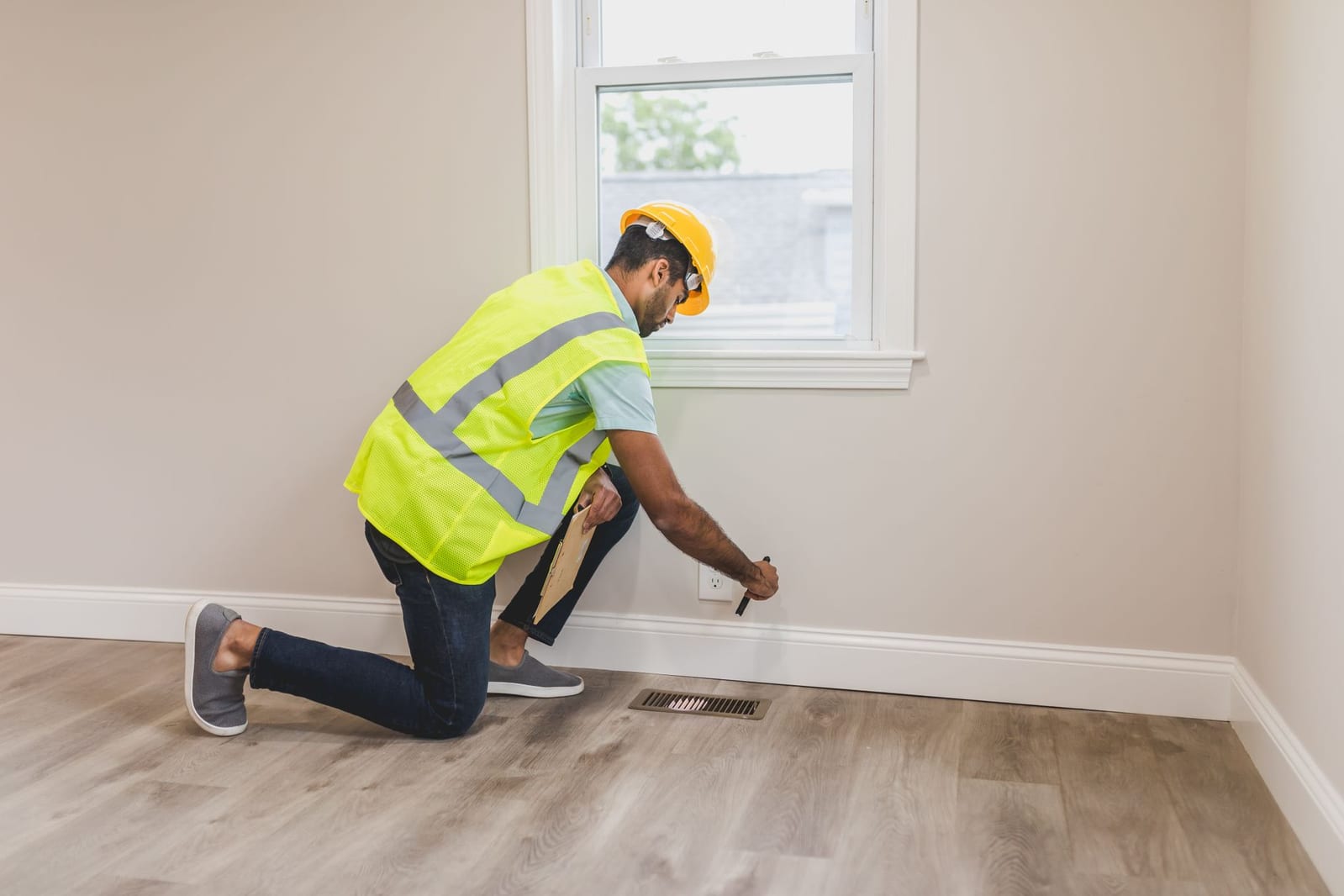
A thorough exterior and interior inspection maps:
- Active burrow locations
- Entry points into the building (foundation gaps, broken sidewalk, basement utility penetrations, gaps around basement windows)
- Food and harborage sources (accessible garbage, compost, dense vegetation against the building)
- Evidence of rat activity (droppings, rub marks, gnaw damage)
In NYC buildings, the most common rat entry points are at the foundation level: broken or missing mortar, gaps around sewer lines, gaps under basement doors, and deteriorated basement window frames.
Step 2 — Exterior Bait Stations
Tamper-resistant rodenticide bait stations are placed at the building’s exterior — near active burrows, along fence lines, and at confirmed travel routes. In NYC, these must be secured and labelled according to regulatory requirements. Rodenticide works over several feedings, which means results take time — typically 1–2 weeks before population reduction becomes visible.
Bait stations are a tool for reducing the exterior population. They do not substitute for exclusion.
Step 3 — Interior Snap Traps
For rats that have already entered the building, snap traps are placed in the basement, utility areas, and anywhere interior activity is confirmed. Because Norway rats are neophobic, traps may need to be left unset initially to allow rats to grow accustomed to them before triggering — a technique professionals know to apply but most DIY operators skip.
Step 4 — Exclusion
Once the active population is reduced, entry points are sealed. Common materials include:
- Heavy-gauge hardware cloth over larger openings
- Concrete patching for foundation gaps
- Steel door sweeps on basement doors
- Expanding foam with steel mesh insert around pipe penetrations
Exclusion without first reducing the population seals active rats inside the building. The correct sequence is always: reduce population, then seal.
Step 5 — Follow-Up and Monitoring
Bait stations and traps are checked on follow-up visits. Station bait is replenished as needed. Trap catches are removed. Activity levels are assessed and the treatment plan adjusted. Rat control in an urban environment is not a one-visit fix — ongoing monitoring is standard practice, particularly for buildings in high-pressure areas.
The Food Source Rule: The Step That Cannot Be Skipped
This is the single most important point in rat control, and it is the one most often ignored:
You cannot eliminate a rat population without removing the food source.
Rats live where food is accessible. In NYC, the primary food source for urban rats is improperly stored garbage. A building that puts out unsecured bags at the kerb, stores food waste in cracked bins, or has a poorly managed loading area will sustain a rat population regardless of how much professional treatment is applied. Bait stations slow population growth; they do not overcome an unlimited food supply.
For residential buildings: sealed garbage bins, no loose bags on the kerb before collection windows, and covered compost.
For commercial operators: enclosed waste storage, compactors where volume warrants, rigorous spill management.
A professional rat exterminator in NYC can reduce your population and seal your building. The garbage management piece is on the property owner — and no reputable operator will pretend otherwise.
Call a Licensed Rat Exterminator
Rat problems in NYC escalate quickly. An established burrow under your foundation in spring can become a serious infestation by summer. Early intervention is always less costly than remediation.
We work with residential buildings, commercial properties, and restaurants across the five boroughs. We inspect, treat, and return — no single-visit promises, no skipped steps.
Call us at {{PHONE_NUMBER}} to schedule an inspection.